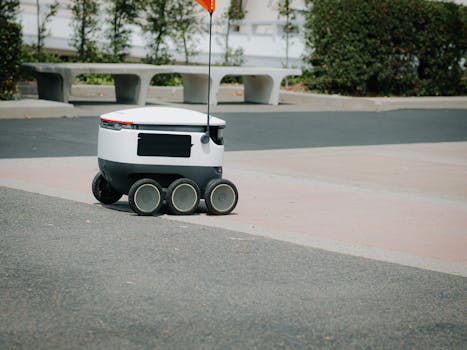

Imagine a world where delivery drones navigate complex urban environments with precision, agricultural drones spot disease in crops from miles above, and emergency response drones autonomously assess disaster zones. This isn’t science fiction; it’s the rapidly approaching reality of autonomous drones powered by artificial intelligence. The integration of AI is no longer a futuristic concept but a transformative force, fundamentally reshaping what these aerial machines can achieve.
For years, drones have been impressive tools, capable of aerial photography and basic surveillance. However, their true potential has been constrained by their reliance on human pilots or pre-programmed flight paths. Artificial intelligence is the key that’s unlocking their autonomy, allowing them to perceive, interpret, and act in real-time, often faster and more reliably than humans can. This advancement is poised to revolutionize countless industries, pushing the boundaries of what we thought possible.
Beyond Remote Control: The AI Advantage
The core of this revolution lies in AI’s ability to imbue drones with a form of digital “brain.” Instead of simply following instructions, AI-powered drones can learn, adapt, and make decisions on the fly.
Enhanced Perception: AI algorithms, particularly computer vision, enable drones to “see” and understand their surroundings. This means they can identify objects, distinguish between different types of terrain, and even recognize faces or license plates with remarkable accuracy.
Intelligent Navigation: Traditional drones follow GPS coordinates. Autonomous AI drones can navigate complex, dynamic environments, avoid obstacles that weren’t in their original programming (like a suddenly appearing bird or a new construction site), and find optimal routes in real-time. This is crucial for operations in unpredictable spaces.
Predictive Capabilities: AI can analyze vast amounts of data collected by drones, identifying patterns and predicting future events. This could range from predicting equipment failure in industrial settings to forecasting crop yields or identifying potential security threats.
Transforming Industries: Practical Applications Taking Flight
The implications of AI-driven autonomous drones are far-reaching, touching almost every sector of our economy and society.
#### Revolutionizing Logistics and Delivery
The dream of drone-based delivery is becoming a tangible reality, thanks to AI.
Automated Package Delivery: Companies are already testing and deploying AI-powered drones for last-mile delivery of everything from medical supplies to retail goods. These drones can autonomously plan optimal delivery routes, navigate residential areas, and even precisely deposit packages at designated drop-off points.
Inventory Management: In large warehouses or sprawling outdoor storage facilities, autonomous drones equipped with AI can conduct rapid and accurate inventory checks, scanning barcodes and identifying misplaced items without human intervention.
#### Enhancing Agriculture and Environmental Monitoring
Precision agriculture is another field experiencing a seismic shift.
Crop Health Monitoring: Drones equipped with multispectral and hyperspectral cameras, coupled with AI analysis, can detect subtle signs of disease, nutrient deficiencies, or pest infestations far earlier than the human eye. This allows farmers to apply treatments precisely where and when they are needed, reducing waste and increasing yields.
Environmental Surveillance: Monitoring vast ecosystems, tracking wildlife, detecting illegal logging, or assessing the impact of climate change are all tasks that AI-powered drones can perform with greater efficiency and scale. They can cover vast areas, collect critical data, and alert authorities to anomalies.
#### Strengthening Infrastructure Inspection and Maintenance
The safety and efficiency of our infrastructure are paramount, and autonomous drones are proving invaluable.
Bridge and Tower Inspections: AI can process imagery from drones to identify micro-cracks, corrosion, or structural weaknesses in bridges, wind turbines, power lines, and other critical infrastructure. This predictive maintenance approach can prevent costly failures and enhance safety.
Pipeline Monitoring: Drones can patrol long stretches of pipelines, using AI to detect leaks, anomalies, or unauthorized activity, ensuring the safe and efficient transport of resources.
The Ethical and Safety Frontiers
As autonomous drones become more capable, addressing the ethical and safety considerations is paramount.
Data Privacy and Security: The vast amounts of data these drones collect raise significant privacy concerns. Robust security measures and clear regulations are needed to protect sensitive information.
Airspace Management: Integrating a large number of autonomous drones into existing airspace requires sophisticated traffic management systems. AI itself will likely play a key role in developing these systems, ensuring safe coexistence with traditional aircraft.
Accountability and Decision-Making: In the event of an accident, determining accountability for an autonomous system is complex. Clear frameworks for responsibility and decision-making protocols for AI are essential.
What’s Next? The Road Ahead for AI-Powered Drones
The evolution of autonomous drones powered by artificial intelligence is not a matter of “if,” but “when” and “how fast.” We’re moving beyond simple flight automation to true situational awareness and intelligent decision-making.
Swarm Intelligence: Imagine coordinated fleets of drones working together, each with a specific role, to achieve a common goal. This “swarm intelligence” powered by AI could tackle complex tasks like large-scale search and rescue operations or intricate aerial construction.
Human-AI Collaboration: The future likely involves seamless collaboration between human operators and AI-driven drones. Humans will provide strategic direction and oversight, while AI handles the complex, real-time execution and data analysis.
* Extended Autonomy: We’ll see drones capable of longer missions, with AI managing energy consumption, self-charging capabilities, and dynamic mission replanning.
Final Thoughts: Embracing the Autonomous Aerial Future
The future of autonomous drones powered by artificial intelligence is incredibly bright, promising unprecedented efficiency, safety, and capability across a multitude of sectors. From optimizing supply chains to safeguarding our environment, these intelligent machines are set to become indispensable partners in our modern world. The key to unlocking their full potential lies in continued innovation in AI, robust regulatory frameworks, and a thoughtful approach to ethical considerations.
As we stand on the cusp of this aerial revolution, what industry do you believe will be most profoundly transformed by these intelligent flying machines?